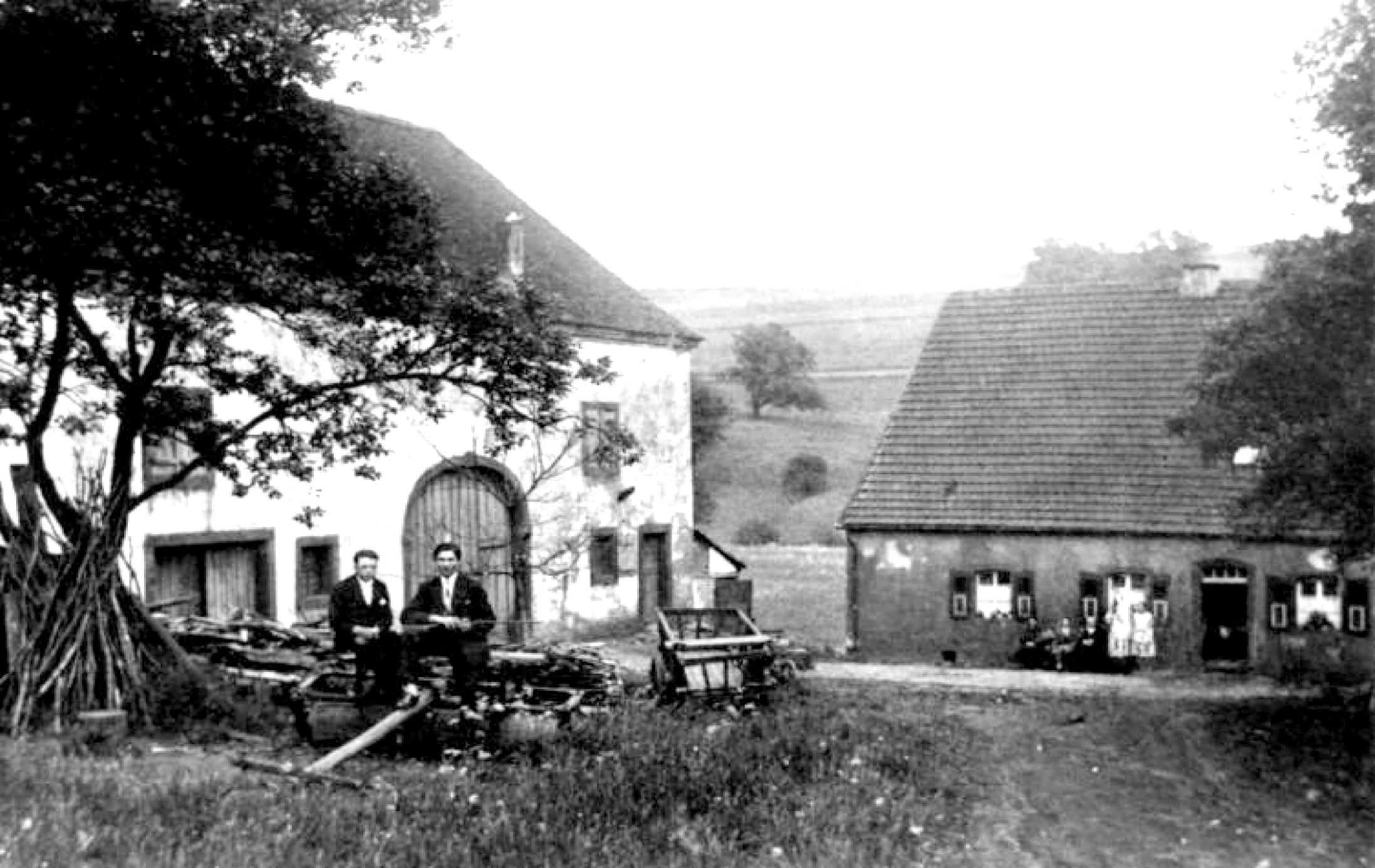
More Than 430 Years of Milling History
From Seed to Oil
More Than 430 Years of Milling History
The Berschweiler mill site dates back to 1592. Over the centuries, it was repeatedly adapted and modernized. Originally, the site operated as a Lohmühle, a special type of mill used to process oak bark for the production of tanning agents. In 1769, Peter Kneip built the oil mill that stands here today. For about 100 years, a grain mill also operated in the basement of the residence, while a sawmill stood next to the waterwheel. This allowed the power of the water to be used throughout the year.
A Long Day’s Work
The oil mill primarily processed rapeseed, but also poppy seeds, nuts, beechnuts, and other oil-bearing seeds and fruits. Depending on its quality, the oil was used for cooking, as machine oil, or as lamp oil. During a 15-hour workday, about 660 pounds (300 kg) of rapeseed could be processed into approximately 40 gallons (150 liters) of oil.
Local farmers grew the oil crops and brought them to the mill, where they were pressed into oil for a fee.
Preserved in Its Original Form: The historic machinery and equipment of the oil mill have survived to this day. Step inside and discover how oil was produced from seeds and nuts – one step at a time.

- Baujahr / Zeitraum
- 1769-1939
- Funktion
- Geschichte der Ölgewinnung
- Besonderheit
- Die Technik ist im Originalzustand erhalten